> For the complete documentation index, see [llms.txt](https://docs.fenixpyre.com/llms.txt). Markdown versions of documentation pages are available by appending `.md` to page URLs; this page is available as [Markdown](https://docs.fenixpyre.com/fenixpyre-for-admins/admin-dashboard/integrations/sharepoint-onedrive/how-to-enable-fenixpyre-integration-in-sharepoint.md).
# How to enable FenixPyre integration in SharePoint
### Create an Azure app (requires Admin access)
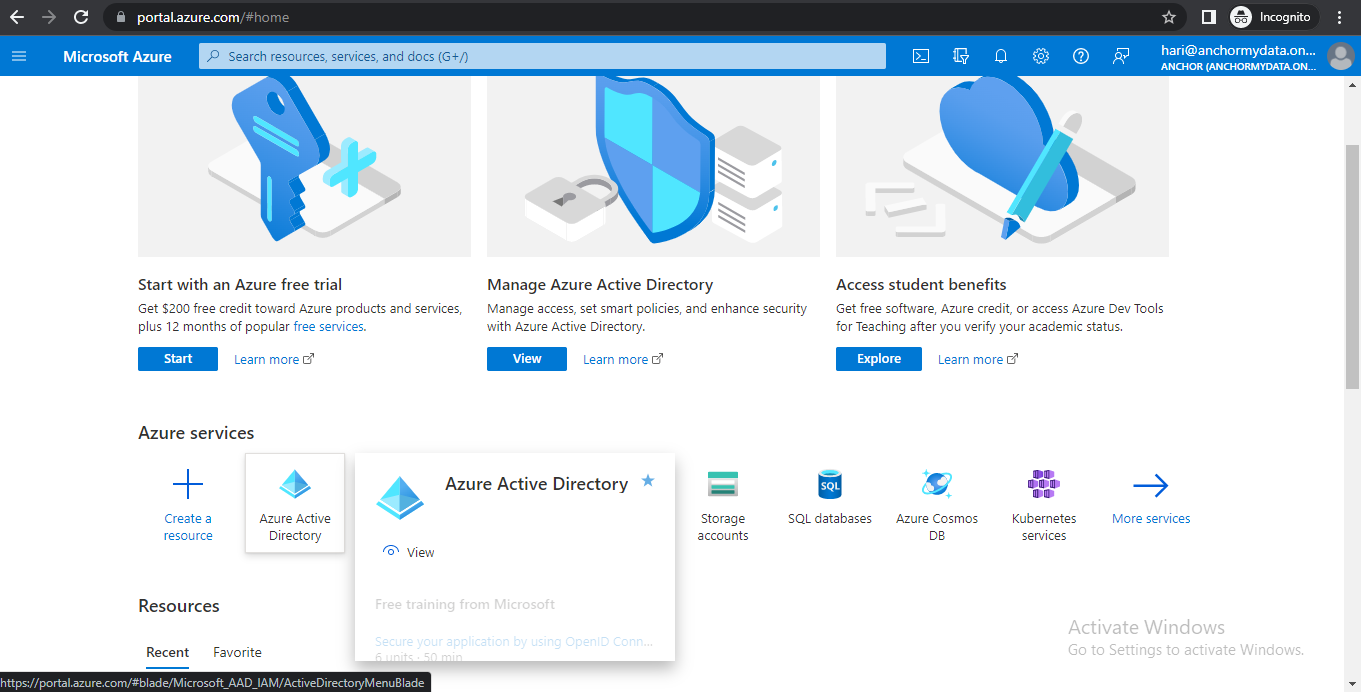
**Step 1:** Go to
**Step 2:** Click on Azure Active Directory
**Step 3:** Click on `App Registrations` from the menu items on the left.
**Step 4:** Click on `New registration` on top of the page.
**Step 5:** Give the app a name.
1. Our recommendation is: `FenixPyre`
**Step 6:** Select the account type and provide a redirect URL, and select app type as web
1. Account Type: Accounts in this organizational directory only (FenixPyre only - Single tenant).
2. App Type: `Web`and add redirect URI as: /integrations/sharepoint and /integrations/sharepoint
3. Click on Add again and add another redirect URL. App Type: `Web`and add redirect URI as /callback/onedrive and /callback/onedrive
4. Click on Add again and add another redirect URL. App Type: `Web`and add redirect URI ashttps\://fenixshare.anchormydata.com/\/callback/onedrive.
**Step 7:** Click on `Register`
**Step 8:** \[Optional] In the app details page, click on `Branding & Properties` tab to customize your app.
1. Logo: Please use the image below for the logo
*
2. Home page URL: `https://fenixpyre.com/`
3. Terms of service URL: [`https://fenixpyre.com/ssa`](https://fenixpyre.com/ssa)
4. Privacy Statement URL: [`https://fenixpyre.com/privacy-policy`](https://fenixpyre.com/privacy-policy)
5. Click on `Save`
**Step 9:** Create a secret key
* Click on `Certificates & Secrets` from the app details page
* Click on `Client secrets` and select `New client secret`
* Give a name to the secret. We recommended the name: `sharepoint_integration`. Select Expiry date as `12 months` and then click on `Add.`
* Copy the secret value to add it to the FenixPyre admin portal later. **Note: Please do not share the secret with anyone except FenixPyre.**
**Step 10:** In the app details page, click on `Manifest` from the left menu items.
**Step 11:** Paste the following JSON into the `addIns` section (highlighted in the screenshot) in the manifest. Click on Save.
```
"addIns": [
{
"id": "76724c1c-90f2-44d1-af08-37166e0223c0",
"type": "FileHandler",
"properties": [
{
"key": "version",
"value": "2"
},
{
"key": "actions",
"value": "[{\"type\":\"custom\",\"id\":\"custom1\",\"url\":\"https://onedrive.anchormydata.com/handler/v1/file/open\",\"displayName\":\"Open\",\"shortDisplayName\":\"Open\",\"icon\":{\"png1x\":\"https://icon-assets.anchormydata.com/fenixpyre_200x200_trans.png\"},\"availableOn\":{\"file\":{\"extensions\":[\"*\"]},\"web\":{}}},{\"type\":\"custom\",\"id\":\"custom2\",\"url\":\"https://onedrive.anchormydata.com/handler/v1/file/share\",\"displayName\":\"Share\",\"shortDisplayName\":\"Share\",\"icon\":{\"png1x\":\"https://icon-assets.anchormydata.com/fenixpyre_200x200_trans.png\"},\"availableOn\":{\"file\":{\"extensions\":[\"*\"]},\"folder\":{},\"allowMultiSelect\":false,\"web\":{}}},{\"type\":\"custom\",\"id\":\"custom3\",\"url\":\"https://onedrive.anchormydata.com/handler/v1/files/anchor/setup\",\"displayName\":\"Add To Auto Encryption\",\"shortDisplayName\":\"Auto Encryption\",\"icon\":{\"png1x\":\"https://icon-assets.anchormydata.com/fenixpyre_200x200_trans.png\"},\"availableOn\":{\"folder\":{},\"allowMultiSelect\":false,\"web\":{}}},{\"type\":\"custom\",\"id\":\"custom4\",\"url\":\"https://onedrive.anchormydata.com/handler/v1/files/anchor\",\"displayName\":\"Encrypt\",\"shortDisplayName\":\"Anchor\",\"icon\":{\"png1x\":\"https://icon-assets.anchormydata.com/fenixpyre_200x200_trans.png\"},\"availableOn\":{\"file\":{\"extensions\":[\"*\"]},\"allowMultiSelect\":true,\"web\":{}}},{\"type\":\"custom\",\"id\":\"custom5\",\"url\":\"https://onedrive.anchormydata.com/handler/v1/files/unanchor\",\"displayName\":\"Decrypt\",\"shortDisplayName\":\"unAnchor\",\"icon\":{\"png1x\":\"https://icon-assets.anchormydata.com/fenixpyre_200x200_trans.png\"},\"availableOn\":{\"file\":{\"extensions\":[\"*\"]},\"allowMultiSelect\":true,\"web\":{}}},{\"type\":\"custom\",\"id\":\"custom6\",\"url\":\"https://onedrive.anchormydata.com/handler/v1/files/logs\",\"displayName\":\"Access Logs\",\"shortDisplayName\":\"Show Logs\",\"icon\":{\"png1x\":\"https://icon-assets.anchormydata.com/fenixpyre_200x200_trans.png\"},\"availableOn\":{\"file\":{\"extensions\":[\"*\"]},\"allowMultiSelect\":false,\"web\":{}}}]"
}
]
}
],
```
**Step 12:** In the app details page, click on `API Permissions` from the left menu items.
1. Anchor requires API permissions to access Microsoft Graph APIs and SharePoint files, permissions etc.
Please provide the following API permissions
**Application Level Permissions:**
1.`Sites.Manage.All` (Graph Permission)
**Delegated Level Permissions:**
1.`User.Read.All` (Graph Permission)
2.`AllSites.FullControl`(SharePoint Permission)
**Step 13:** After adding the API permissions please click on `Grant admin consent`
**Step 14:** For the App to be visible in SharePoint/OneDrive/Teams following Steps has to be performed
* Go to Azure Active Directory or Microsoft Entra ID
* Click on Enterprise applications
* Select your App from the list
* Click on Properties
* App Visibility
* To enable app for specific users and groups
* **Set "Assignment Required" to "Yes"** – This ensures that only specifically assigned users have access.
* **Set "Visible to Users" to "Yes"** – This hides FenixPyre from general users, making it accessible solely to those who are assigned.
* To enable app for all the users across organization
* **Set "Assignment Required" to "No"**
* **Set "Visible to Users" to "Yes"**
---
# Agent Instructions
This documentation is published with GitBook. GitBook is the documentation platform designed so that both humans and AI agents can read, navigate, and reason over technical content effectively. Learn more at gitbook.com.
## Querying This Documentation
If you need additional information that is not directly available in this page, you can query the documentation dynamically by asking a question.
Perform an HTTP GET request on the current page URL with the `ask` query parameter, and the optional `goal` query parameter:
```
GET https://docs.fenixpyre.com/fenixpyre-for-admins/admin-dashboard/integrations/sharepoint-onedrive/how-to-enable-fenixpyre-integration-in-sharepoint.md?ask=&goal=
```
`ask` is the immediate question: it should be specific, self-contained, and written in natural language.
`goal` is optional and describes the broader end goal you are ultimately trying to accomplish on behalf of the user. GitBook uses it to tailor the answer towards what is most useful for that goal.
The response will contain a direct answer to the question and relevant excerpts and sources from the documentation.
Use this mechanism when the answer is not explicitly present in the current page, you need clarification or additional context, or you want to retrieve related documentation sections.